Israeli Voters Face Ballot as Violence Continues in Gaza and West Bank
Polls opened Tuesday for the first national vote since the October 7, 2023 attack, with analysts questioning whether any contender offers a departure from current policy toward Palestinians.
By Emily Carter ·
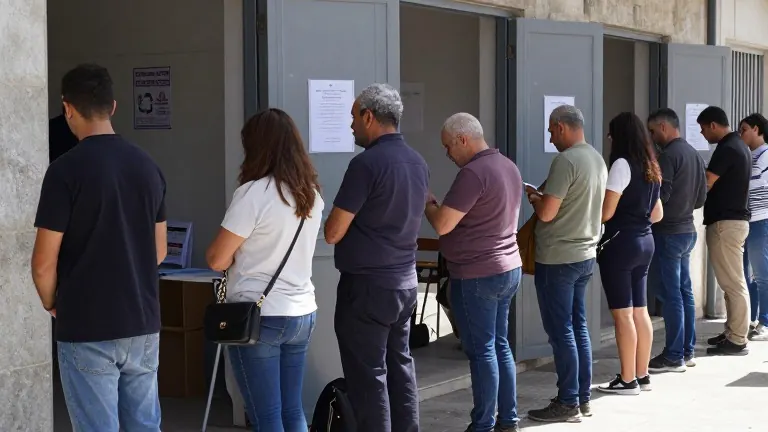
Israelis began casting ballots Tuesday in a race that hinges on whether to keep Benjamin Netanyahu in power, a contest unfolding as deadly attacks continue in Gaza and raids intensify in the West Bank. The vote is the first since the Hamas-led attack of October 7, 2023, and the wars that followed in Gaza, Iran, Lebanon, Yemen, Syria and Qatar. Netanyahu, the country's longest-serving prime minister, is seeking to extend his tenure after leading a coalition that joined far-right ultranationalists with ultra-Orthodox Jewish parties.
He faces an ICC warrant on war crimes charges over Gaza and a domestic corruption trial covering bribery, fraud and breach of trust, which he denies. His challengers run under a self-described Zionist opposition bloc. The campaign has centered on accountability for security failures before October 7, disputes over ultra-Orthodox military service and efforts to exclude Arab-led parties. More than 74,000 people have been killed in Gaza, and a yearlong ceasefire has not stopped daily attacks there.
The drift toward the right predates the current government. The collapse of the peace process and repeated security crises eroded the political center and left over several decades, clearing the way for measures such as the 2018 Nation-State Law and the continued expansion of settlements in occupied territory. Most analysts say the pace of that shift accelerated under Netanyahu's latest government, which took office in 2022 and moved to strip the Supreme Court of its power to review government actions. The coalition also declined to follow court rulings on drafting the ultra-Orthodox minority, whose parties sustained the government.
National Security Minister Itamar Ben-Gvir and Finance Minister Bezalel Smotrich, a religious Zionist, backed the judicial overhaul Netanyahu launched in early 2023. That overhaul continues. Ahron Bregman, a senior teaching fellow at King's College London, said a change of prime minister would alter the atmosphere in the country rather than its direction. "Don't be mistaken," Bregman said. "Israel, particularly after 7 October, turned sharply to the right, and any new government will reflect and mirror this reality."
Yossi Mekelberg, a senior fellow at Chatham House, framed the ballot as a question of governance. "The decision facing Israel of whether to retain a Netanyahu-led government or not is ultimately the decision on whether to live in a functioning democracy or a democracy in name only," he said. He also cited choices on the West Bank, including whether to annex the territory and pursue what he called the population's "voluntary migration." Yehouda Shenhav-Shahrabani, an Israeli sociologist, said the contest does not turn on ideology. "The entire Israeli political system operates within the racist framework of Jewish supremacy," he said.
Daniel Levy, a former Israeli government adviser, said the treatment of Palestinians sits outside the campaign. "How can it be a referendum on genocide, or anything to do with the treatment of Palestinians in Gaza?" Levy asked. He said the issue is a consensus among Zionist parties, with disagreement over "whether it's the state's job to oppress Palestinians, or if the settler militias also have a role" in doing so. Arab-led parties, which represent Palestinian citizens of Israel, make up one-fifth of the population and are not being considered for coalition membership by any mainstream candidate.
Neither bloc has signaled a willingness to bring Ra'am or the Joint List into a government, while ultra-Orthodox parties remain welcome to both. Shenhav-Shahrabani said the line runs through identity rather than democratic principles: "The distinction is not between democratic and anti-democratic forces, but between Jews and Palestinians. As long as there is no genuine binational political vision, racism and the systematic restriction of Palestinian rights will remain fundamental features of Israeli society." Polls close Tuesday, after which coalition negotiations begin among the parties that clear the threshold.
Source: Al Jazeera