
Russia Accelerates Military Upgrades Near Finnish Border
New satellite imagery reveals the demolition of old structures and the construction of new training facilities at the Kamenka garrison, part of a broader effort to strengthen Russian ground forces in the region.
By News Media House Staff ·
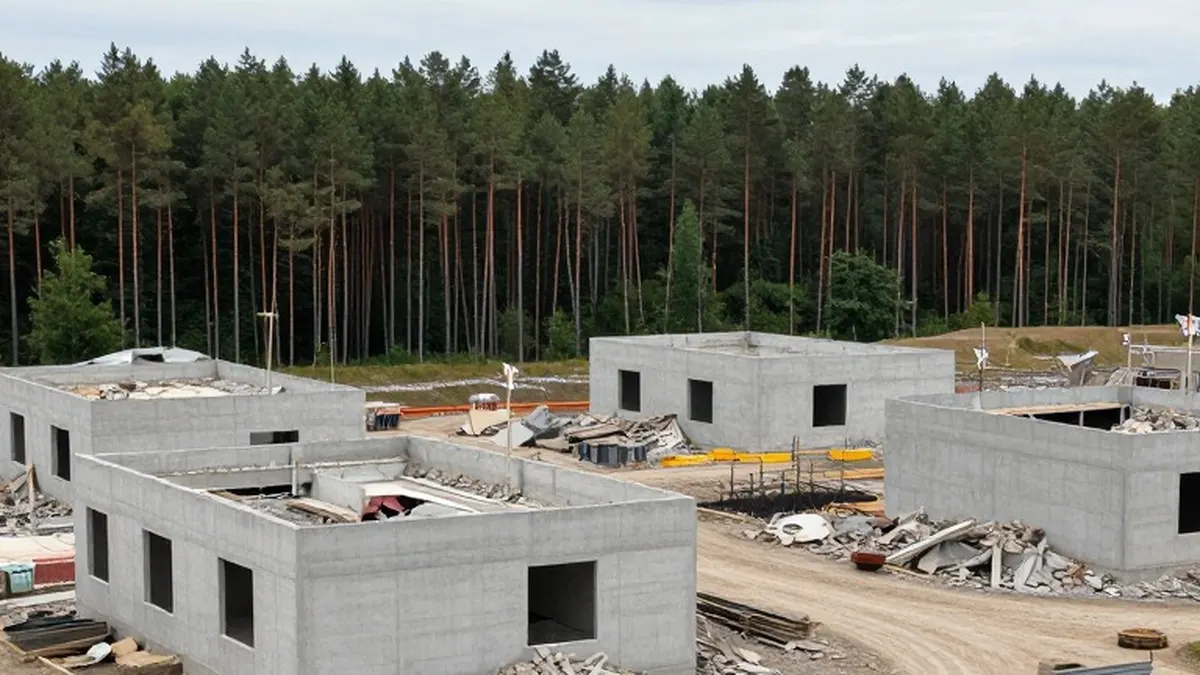
Finnish public service broadcaster Yle has reported that Russia has expanded its modernization program for military garrisons located near the Finnish border to include the Karelian Isthmus. Satellite images obtained by the outlet indicate significant changes at the Kamenka garrison, where numerous buildings were demolished earlier this year to make way for new construction. This development marks a notable shift in military infrastructure in an area that has historically been a focal point for Russian ground forces facing Finland.
The Kamenka garrison is situated approximately 60 kilometers from the Finnish border in a straight line. During the period when the territory belonged to Finland, the area was known as Kaukjärvi and was part of the municipality of Uusikirkko. According to the satellite data, the redevelopment has focused heavily on the southern part of the garrison. Several old hangars, two canteens, and two barracks have been torn down. The construction site had not been previously highlighted in reports from either Russian or Western sources, suggesting a level of secrecy around the expansion efforts.
Among the new structures under construction is a training center dedicated to combat and firearms proficiency. The Kamenka garrison currently houses Russia's most significant concentration of ground forces aimed at the Finnish border. The large garrison and its associated training ground are primarily used by the 69th Motorised Infantry Division. In 2024, Russian leadership decided to reinforce its northern military presence by re-establishing the Leningrad Military District. Consequently, troop numbers in areas bordering Finland are expected to rise gradually, potentially reaching several times their previous levels.
Historically, since the late 1990s, the Kamenka garrison accommodated a brigade of roughly 4,400 soldiers. It now hosts a division with a planned strength of 11,000 personnel. However, the division is still in the process of being fully formed. The garrison functions as a key training hub where military personnel are prepared for active war scenarios. Soldiers assigned to this division have participated in combat operations in Ukraine, specifically in the Kharkiv Oblast, linking the regional buildup directly to the ongoing conflict.
The redevelopment of Kamenka was anticipated by many analysts, as Russia had previously announced plans to bolster its forces in response to the accession of Finland and Sweden to NATO. Construction activity has not been limited to Kamenka. Work has also been observed at the nearby Kirillovskoye garrison, also known as Perkjärvi, which is located about eight kilometers to the east. Last year, a large building complex and several smaller workshops were constructed at that site, indicating a broader trend of infrastructure improvement in the region.
Finnish President Alexander Stubb has emphasized that Finland has no intention of leaving NATO and will remain a committed member of the Alliance. This stance is significant as Moscow has continued to press for changes in NATO's posture. The New York Times reported that during negotiations in Abu Dhabi aimed at ending the war in Ukraine, Russia again demanded that NATO withdraw its troops to the positions they occupied in 1997. Such demands highlight the strategic importance Russia places on the geography of the alliance's eastern flank.
In the United States, Senator Tom Cotton, the Republican chair of the Senate Intelligence Committee, commented on the ongoing diplomatic efforts. He stated that further negotiations with Russia to end the war appear pointless. Cotton argued that the Kremlin's persistent demands for NATO troop withdrawals indicate that President Vladimir Putin has no genuine intention of negotiating a peace deal. These political reactions underscore the tension surrounding the military modernization observed on the Karelian Isthmus.
The expansion of military infrastructure in the region reflects a long-term strategy to solidify Russia's defensive and offensive capabilities against its Nordic neighbors. The transition from a brigade-sized unit to a larger division at Kamenka signals a substantial increase in operational readiness. As construction continues at both Kamenka and Kirillovskoye, the area is likely to become a more robust military zone, further complicating the security dynamics in the Baltic Sea region.
The use of satellite imagery to track these changes provides valuable insight into the pace and scope of Russian military preparations. The demolition of older facilities and the erection of modern training centers suggest a focus on updating equipment and training methods. This modernization is part of a larger effort to ensure that forces in the Leningrad Military District are capable of responding to potential threats or conducting operations with greater efficiency.
As Finland and its NATO allies monitor these developments, the significance of the Kamenka garrison grows. The area's historical ties to Finland and its current role as a major military hub make it a critical point of interest for regional security experts. The ongoing construction and troop buildup serve as a tangible indicator of Russia's continued investment in its northern frontier, even as diplomatic channels remain active in other parts of the world.
Originally published by News Media House





