
Middle East Flashpoints: Saudi strikes, Iraqi militia deal, and oil flow shifts
New military engagements in Yemen and a security compromise in Iraq coincide with a measurable drop in November crude exports from the region.
By Garrett Lindqvist ·
Saudi forces intercepted five drones and one ballistic missile fired by Yemen’s Houthi rebels early Friday morning. The projectiles were aimed at Riyadh, the kingdom's capital and largest city, according to the Saudi-led coalition.
The coalition announced that it had also conducted strikes against Houthi smuggling and transport networks in Hodeidah, the main port on the Red Sea. A separate military operation took place in Sanaa, the rebel-held capital, where targets were selected to limit the group's ability to attack civilians in Yemen and Saudi Arabia.
These engagements followed a major air campaign launched by Saudi forces earlier this week across Houthi-controlled territory. The Houthis had previously targeted Saudi airports, air bases, and the financial district of Riyadh. The two sides exchanged threats regarding strikes on key ports in their respective territories.
In Iraq, security forces established a command headquarters on the outskirts of Jurf al-Sakhar, a district south of Baghdad. The deployment aims to secure a stronghold of Kataib Hezbollah, an Iran-backed militia that the government accused of smuggling oil in the area.
Two Iraqi officials, speaking on condition of anonymity, confirmed that the government and the militia reached an agreement. The deal allows Iraqi army, federal police, and energy sector police to deploy in the zone. In a compromise, fighters from the Popular Mobilization Forces, a group of mostly Shiite armed organizations, will also be present.
Negotiations for the agreement were facilitated by Esmail Qaani, the commander of Iran’s Quds Force. Under the terms, Kataib Hezbollah will withdraw its fighters from the area within one month. The militia had threatened to fight back if security forces attempted an incursion without a prior understanding.
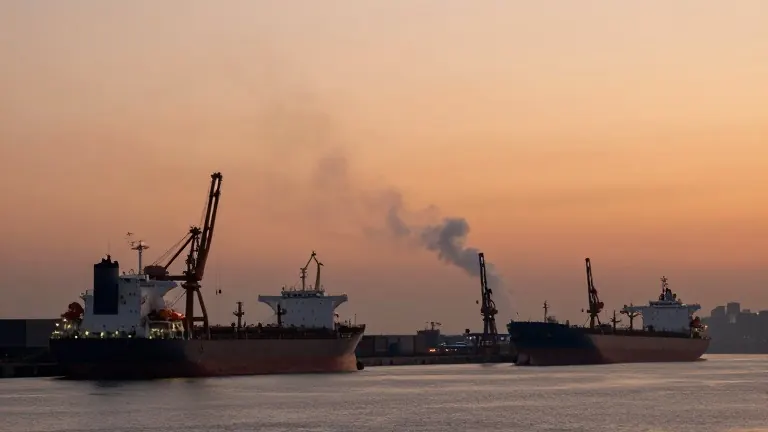
Energy analysts report that Middle East oil exports in the first two weeks of November fell by approximately 20% to 13 million barrels per day. This is a decline from October, when exports reached 15 to 16 million barrels per day, roughly matching prewar levels. The drop is attributed to Iranian attacks on tankers and reduced flow through a Saudi pipeline to the Red Sea port of Yanbu.